

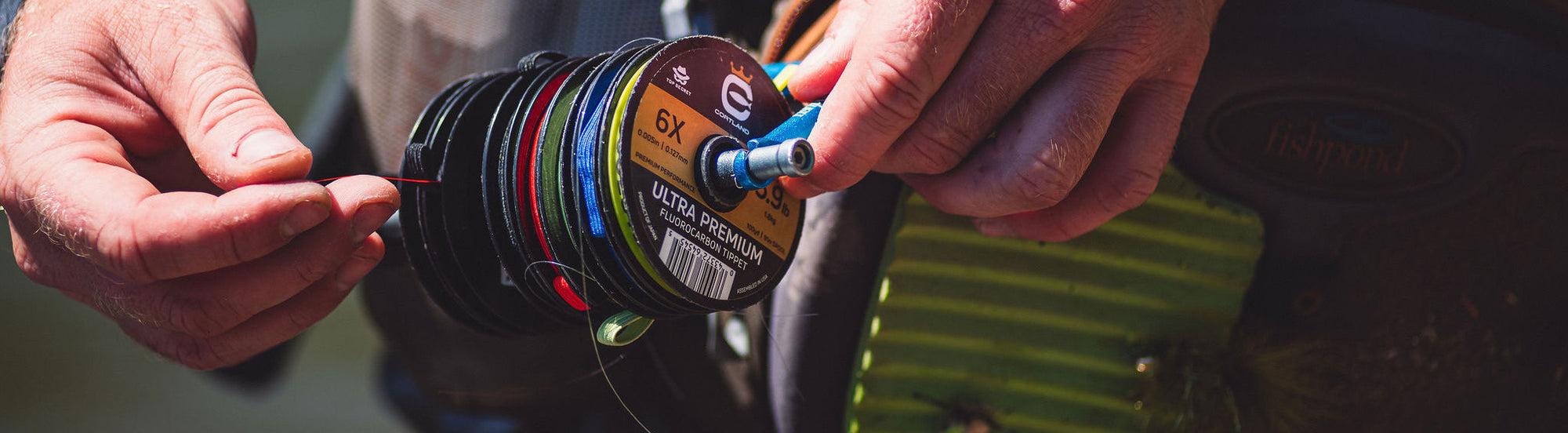
Tippet Material
The final connection between leader and fly.
Tippet choice affects presentation, visibility, sink rate, abrasion resistance, and knot strength. Choose the material and size that match the flies, water, and fish in front of you.
Application Guide
Use these common tippet choices as a starting point, then adjust size and material based on fly choice, water clarity, current speed, and how selective the fish are. For more setup help, view the Line & Leader Setup Guide.
Dry Fly
Super Supple, Copolymer Nylon Tippet or Ultra Premium
3X to 8X, matched to fly size and conditions
Nylon and Ultra Premium help with softer presentations, natural drift, and a little extra forgiveness on lighter tippet.
Nymphing
Fluorocarbon or Ultra Premium Fluorocarbon Tippet
4X to 7X for most trout nymphing situations
Fluorocarbon is a strong choice below the surface when you want abrasion resistance, faster sink rate, and reduced underwater visibility.
Streamers
Ultra Premium or Copolymer Nylon Tippet
03X to 3X for larger flies and aggressive strikes
Heavier tippet helps turn over larger flies and gives you more confidence around current, cover, and hard eats.
All Purpose
Copolymer Nylon or Fluorocarbon Tippet
2X to 6X for general trout fishing
A practical starting point for mixed rigs, changing conditions, and days when you are switching between fly types.


When to Replace
Check tippet often and replace it before weak spots cost you a fish. Retie after hard fights, contact with rocks or wood, or any time the material feels rough between your fingers.
- Visible nicks or abrasion
- Rough or flattened sections
- Weak or slipped knots
- Heavy memory or coiling
- Discoloration or age damage
- After landing larger fish
